Since 1865

The Hunt at Richards Ranch
Trophy-worthy moments.
Big Game & Exotic Hunts
Richards Ranch offers more than a lease—it’s an invitation. Our wildlife management is top-tier, our guides know every ridge and thicket, and our guest cabins offer warm beds and good stories when the sun sets.
Antelope Hunting
Addax
Addax
-
Origin: Africa
-
Horn Size: 30-38 inches
-
Weight: 130-280 pounds
-
Estimated World Population: 2,000
-
Season: Year Round
Addax have been listed as critically endangered, however they are thriving on Texas ranches.They have broad, flat hooves with flat soles which keep them from sinking into the desert sand. The coats are dark gray or brown in the winter, and they turn sandy white in the summer. They dig deep depressions in the sand where they rest in warm weather. They also prefer to find shade under large boulders that provide protection from the sun and wind of the hot desert.
Blackbuck
Blackbuck
-
Origin: India
-
Horn Size: 18-28 inches
-
Weight: 70-100 pounds
-
Estimated World Population: 100,000+
-
Season: Year Round
Blackbuck antelope have a black coat with white under parts, and a white eye ring. The males are born light brown and then grow blacker on their backs as they grow older and during the winter. Males stand about 32 inches tall at the shoulders. Blackbuck antelope are also extremely territorial and will often fight to the death. They are some of the fastest animals on earth and can outrun almost any other animal over long distances reaching speeds up to 50 miles per hour when necessary.
Black Wildebeest
Black Wildebeest
-
Origin: Africa
-
Horn Size: Up to 31 inches
-
Weight: 240-400 pounds
-
Estimated World Population: 18,000
-
Season: Year Round
Black Wildebeest, also known as white tailed gnu, have a dark brown to black coat, characterized by their long, white, horse-like tail. They have long, dark colored hair between their forelegs and underbelly. They have bushy, dark tipped manes that stand straight up on the back of the neck. They also have black, bristly hair on the muzzle and under the jaw. Wildebeest are extremely fast runners reaching speeds up to 50 miles per hour. These grazers communicate with each other with a variety of vocal and visual signals.
Blesbok
Blesbok
-
Origin: South Africa
-
Horn Size: 15-20 inches
-
Weight: 120-175 pounds
-
Estimated World Population: 240,000
-
Season: Year Round
Blesboks are brown with a very distinct white blaze on the face. They have a lighter colored saddle on the back, and the rump an even lighter shade. Although extremely territorial, Blesbok can run over 40 miles per hour when threatened.
Blue Wildebeest
Blue Wildebeest
-
Origin: Africa
-
Horn Size: 21-33 inches
-
Weight: 570-640 pounds
-
Estimated World Population: 1,500,000
-
Season: Year Round
The blue wildebeest, also known as the brindled gnu, is a large antelope and one of the two species of wildebeests. Adults are bluish gray, light gray, or grayish brown, with long thick mains. They have slender legs, with very muscular heavy shoulders and large bovine like horns that extend outward, then up and inward. Males have a Boss on top of the head connecting the horns which can span over 36 inches. The Blue Wildebeest is commonly referred to as the “poor man’s buffalo.”
Dama Gazelle
Dama Gazelle
-
Origin: Africa
-
Horn Size: 12-15 inches
-
Weight: 77-165 pounds
-
Estimated World Population: 500
-
Season: Year Round
The largest of all gazelle species, the Dama has a small white patch on the throat, and a white face, with red cheek patches and thin black stripes running from the eyes to the corners of the mouth. All Dama gazelles have thin legs and a long, slender neck, as well as long, S-shaped horns, which are larger and thicker in males.
Eland
Eland
-
Origin: Africa
-
Horn Size: 26-43 inches
-
Weight: 1,100-2,000 pounds
-
Estimated World Population: 136,000
-
Season: Year Round
The Common Eland is the second largest antelope in existence. Its coat is tan, fawn or tawny colored, and turns slightly bluish-grey on the neck and shoulders with age. Its smooth horns rise with a slight twist at the bases, back from the head to sharp points. The massive adult males have a large fold of loose skin that hangs below the throat (the dewlap), and a patch of long, coarse, dark hair on the forehead (the mop). The dewlap and mop become respectively larger and bushier with age. Eland make a loud clicking sound when they walk. Weighing in at up to one ton, these massive antelope are still able to vertically jump over 9 feet.
Gemsbok
Gemsbok
-
Origin: Africa
-
Weight: 400-650 pounds
-
Horn Size: 34-38 inches
-
Estimated World Population: 370,000+
-
Season: Year Round
The Gemsbok is a large, strikingly handsome animal with distinct black and white markings and long spear like horns. It’s compact, muscular body is a pale grayish-fawn color. Black facial stripes connect with a black band encircling the muzzle. The ears end in a black tip, and there is a narrow black stripe down the spine, a black patch on top of the rump, and a black tail. All four legs are black on their top half, with white below the knees and black patches on the shins.The tips are pointed and sharp which enables them to fight off lions.
Grant's Gazelle
Grant's Gazelle
-
Origin: Africa
-
Weight: 100-181 pounds
-
Horn Size: 20-32 inches
-
Estimated World Population: 160,000+
-
Season: Year Round
The Grant’s gazelle is a species of gazelle distributed from northern Tanzania to South Sudan and Ethiopia, and from the Kenyan coast to Lake Victoria. Its Swahili name is swala granti. It was named for a 19th-century Scottish explorer, Lt Col Grant.
Impala
Impala
-
Origin: Africa
-
Horn Size: 18-36 inches
-
Weight: 90-140 pounds
-
Estimated World Population: 1,500,000
-
Season: Year Round
Impala, Africa’s most common antelope, is medium in size reaching 28–36 inches at the shoulder. It has a beautiful glossy reddish-brown coat and slender, lyre-shaped horns. Impala can run over 37 miles per hour, and can jump as high as 10 feet and an impressive 33 feet in distance.
Nilgai
Nilgai
-
Origin: Asia
-
Horn Size: 8-11 inches
-
Weight: 400-700 pounds
-
Estimated World Population: 140,000
-
Season: Year Round
The Nilgai, also referred to as Blue Bull, is a large antelope that more closely resembles a horse than a bull in body structure. Standing 4-5 feet tall at the shoulder, the Nilgai’s shoulders sit higher than its hindquarters giving a long, sloping appearance. Males are born brown but turn blue-gray or charcoal as they mature. They have a narrow white rump patch and throat bib, as well as 2 patches above each ankle and 2 small spots on the cheek and jawline. Males have sharp horns that grow up and curve slightly forward. Bulls have a unique “beard” of hair that hangs from their neck resembling that found on a male turkey.
Nyala
Nyala
-
Origin: Southern Africa
-
Horn Size: 24-33 inches
-
Weight: 120-310 pounds
-
Estimated World Population: 32,000
-
Season: Year Round
The Nyala is an elegant and rather attractively marked antelope, with a grayish to chestnut-brown coat, a white chevron between the eyes, two white spots on the cheeks, two white patches on the throat and chest, white spots on the flanks and rump, and up to nine poorly defined white stripes on the sides The under parts are slightly paler, and the dark legs bear white patches on the insides, while the tail is rather bushy, with a white underside. The pattern of markings may be unique to the individual.
Scimitar Horned Oryx
Scimitar Horned Oryx
-
Origin: Northern Africa
-
Horn Size: 35-50 inches
-
Weight: 300-450 pounds
-
Estimated World Population: 6,000+
-
Season: Year Round
Scimitar Horned Oryx inhabit semi-desert and deserts and can live in extreme heat. However it was nearly hunted to extinction for its delicious meat and magnificent horns. Today, Scimitar are thriving on Texas ranches. The horns curve backwards over the Scimitar’s back with a white and reddish brown chest and black markings on the forehead and down the nose. The white coat helps reflect the suns rays, and the black marks protect against sunburn. A broken horned oryx is believed to be the original unicorn.
Bovine Hunting
Buffalo
Buffalo
-
Origin: North America
-
Horn Size: 17-22 inches
-
Weight: 1,200-2,100 pounds
-
Estimated World Population: 500,000
-
Season: Year Round
The American Buffalo, or Bison, is the largest terrestrial mammal in North America. It can stand over 6 ft. tall at the shoulder and can grow as much as 11 feet long. Buffalo have thick, shaggy, brown or reddish brown hair on their heads and necks with shorter hair on their hind quarters. Even though they can weigh over a ton, Buffalo are capable of jumping as high as 6 feet in the air and can run over 40 miles per hour. They are nomadic grazers and typically travel in herds. Their meat is similar to beef, however it is much leaner.
White Buffalo
White Buffalo
-
Origin: North America
-
Horn Size: 17-22 inches
-
Weight: 700-2200 pounds
-
Season: Year Round
The White Buffalo is a very unique bison that is sought after for its extremely rare color. It is estimated that only 1 in every 10 million bison births result in a White Buffalo. They can reach over 6 feet tall and 10 feet long, and weigh in excess of 2,000 pounds. The heads and forequarters are massive. They have amazing mobility, speed, and agility and are able to sprint at speeds of up to 40 miles per hour.
Deer Hunting
Whitetail Deer
Whitetail Deer
-
Origin: North America
-
Weight: 150–300 pounds
-
Estimated U.S. Population: ~30 million
-
Season: Fall–Winter / Best October–January
The whitetail is the crown jewel of Texas hunting. Bucks can grow impressively wide antlers with sweeping main beams and towering tines, especially when managed on quality forage and habitat like we have here at Richards Ranch. Known for their keen eyesight, sharp ears, and ghost-like movements through the brush, mature bucks offer a fair chase that will test your patience and reward your persistence.
Axis Deer
Axis Deer
- Orgin: Asia
-
Antler Size: 31-36 inches
-
Weight: 180-250 pounds
-
Estimated World Population: 75,000
-
Season: Year Round / Best May-September
The distinctive vivid reddish fur of the Axis deer, marked with white spots, makes it one of the most attractive species of all deer. A big buck can weigh up to 250 pounds with a beautiful set of six-by-six-antlers that can reach 30 inches or more. Axis bucks shed their antlers on their birthdays rather than in a particular season. Therefore it is not uncommon to see both hard-horned and velvet bucks at the same time. Axis are inherently very cautious and elusive and can prove to be a serious challenge for even the most seasoned hunter.
Fallow Deer
Fallow Deer
-
Origin: Europe
-
Weight: 150-300 pounds
-
Estimated World Population: 50,000
-
Season: Year Round | Best Sept – Feb
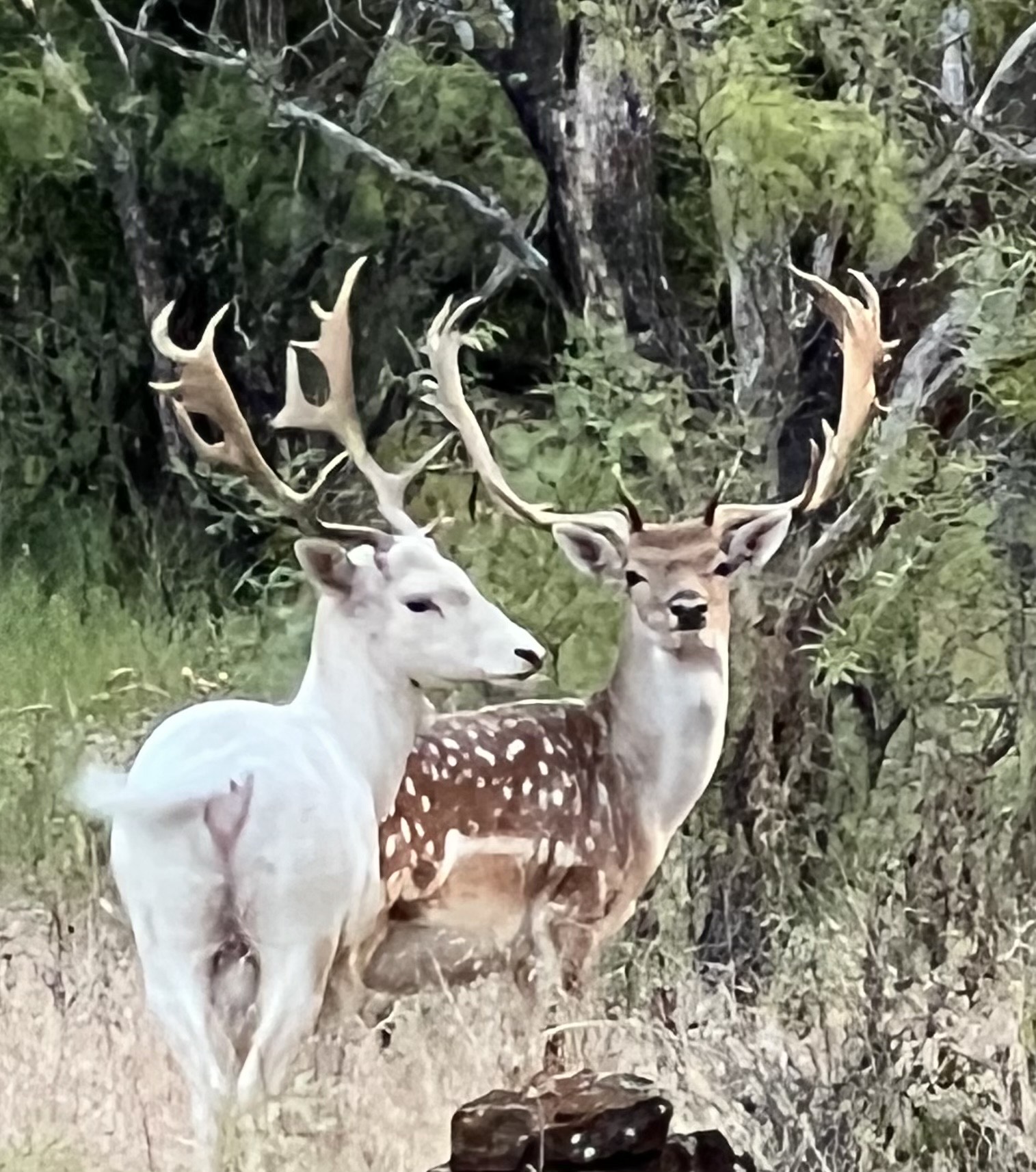
The fallow deer has three different color varieties: White, Spotted, and Chocolate. During the winter, the coat becomes darker and thicker, and the white spots may become more difficult to see. With numerous points, their palmated antlers make fallow a magnificent and popular trophy.
Pere David’s Deer
Pere David’s Deer
-
Origin: Asia
-
Antler Size: 31-35 inches
-
Weight: 300-500 pounds
-
Estimated World Population: 3,000+
-
Season: Year Round | Best June – Nov
he Pere David’s Deer, or Milou, is completely extinct in the wild. However, huntable populations now exist on ranches in the United States. The Pere David has a longish tail, and stands approximately 45 inches tall at the shoulder. Their color is a reddish gray with a white underbelly and a white ring around the eyes. Their antler shape is different than most deer, with forked brow tines and long slender back horns with numerous points off them. Pere David’s are the only deer to grow rear facing antler tines.
Red Stag
Red Stag
-
Origin: Europe
-
Antler Size: 32-45 inches
-
Weight: 750-1,000 pounds
-
Estimated World Population: 100,000+
-
Season: Year Round | Best Sept – Feb
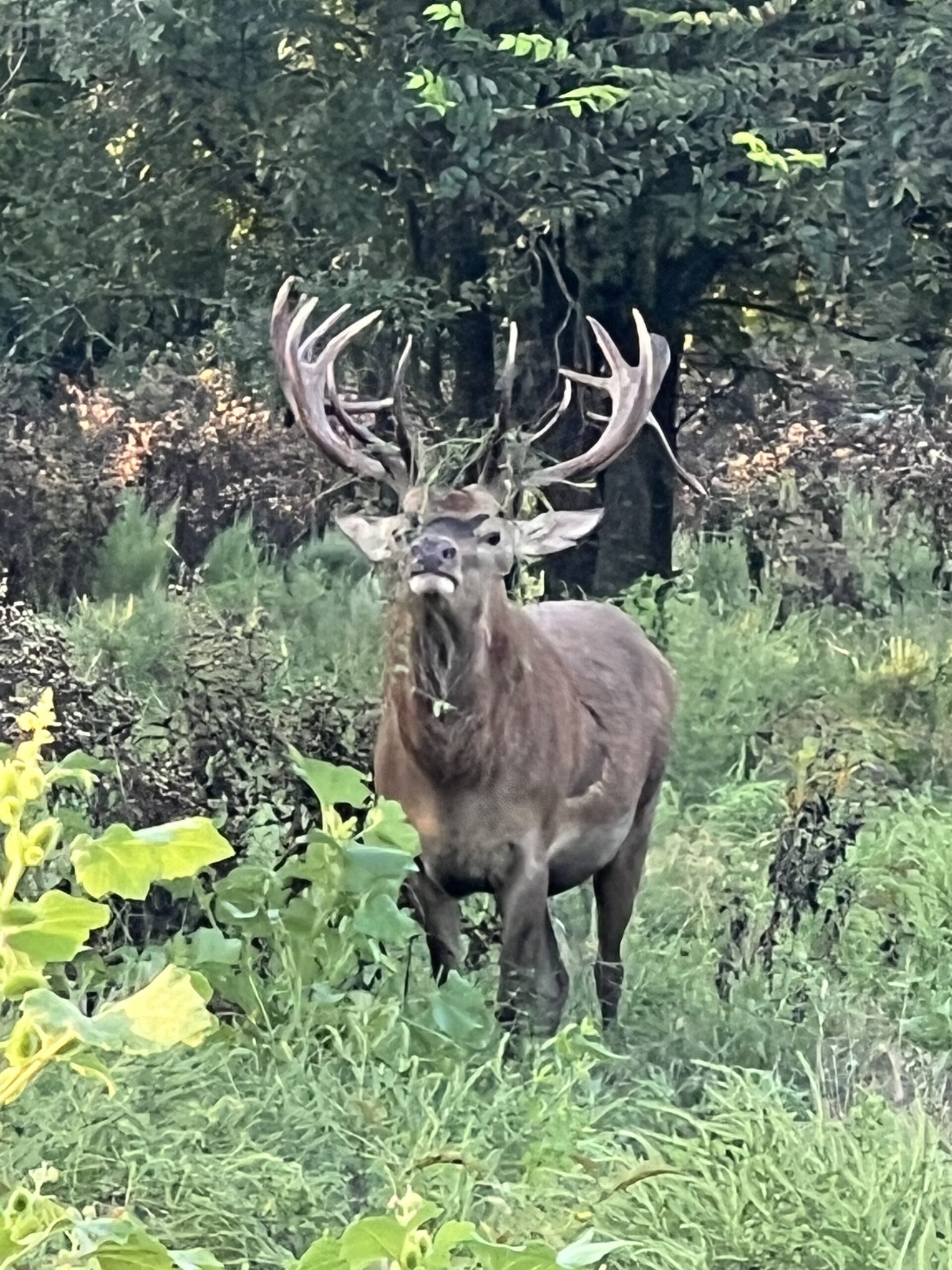
Red Stags are the fourth largest deer species and with more than 66 points are capable of rising antlers!
Sika Deer
Sika Deer
-
Origin: East Asia
-
Antler Size: 11-29 inches
-
Weight: 66-350 pounds
-
Estimated World Population: 100,000+
-
Season: Year Round | Best Sept – Feb
The Sika deer, also known as the spotted deer or the Japanese deer, is a deer species native to many parts of East Asia and introduced to different parts of the world. In northern Vietnam in the south to the Russian Far East in the north, it is now rare in these areas, with the exception of Japan, where the species is overabundant.
Goat Hunting
Ibex
Ibex
-
Origin: Middle East
-
Horn Size: 14-48 inches
-
Weight: 55-154 pounds
-
Estimated World Population: 1,200
-
Season: Year Round
The Nubian Ibex is extremely rare and one of the most impressive of all the exotics. Their massive semicircular horns curve upward, backward, and finally down. Having the ability to jump several times their own height and climb any terrain, hunting the extremely agile Ibex can prove to be a serious challenge for the most seasoned hunter.
Markhor
Markhor
-
Origin: Asia
-
Horn Size: 40-49 inches
-
Weight: 100-243 pounds
-
Estimated World Population: 5,000
-
Season: Year Round
Markhor goats are the largest of the goat species and arguably the most impressive. These endangered goats are capable of climbing large trees as well as sling-shotting themselves over 9-feet-tall fences!
Sheep Hunting
Aoudad
Aoudad
-
Origin: Northern Africa
-
Horn Size: 29-35 inches
-
Weight: 100-300 pounds
-
Estimated World Population: 30,000
-
Season: Year Round
Aoudad, also known as Barbary Sheep, are actually more closely related to a goat. They have long, thick, curved horns that are very impressive. Their hair is sandy brown with long beard type hair on the bottom of their necks and chaps on their front legs. Males can stand up to 40 inches at the shoulder and weigh in excess of 300 pounds. They have a very strong scent, make grunting sounds, and have amazing climbing ability. Very wary, Aoudad are one of the most difficult trophies to harvest.
Black Hawaiian
Black Hawaiian
-
Origin: North America
-
Horn Size: 28-38 inches
-
Weight: 80-160 pounds
-
Estimated World Population: 2.5 million+
-
Season: Year Round
Black Hawaiians are thought to be a cross between a Mouflon and a black-haired sheep from the Hawaiian islands. Rams are black and frequently have white on the muzzle around the nose. The horns are usually dark and grow up, back, down, forward, up, and out. They typically have a thick beard on their neck.
Corsican Sheep
Corsican Sheep
-
Origin: North America
-
Horn Size: 28-38 inches
-
Weight: 80-160 pounds
-
Estimated World Population: 2.5 million
-
Season: Year Round
The Corsican is typically brown with a black colored belly. Males will often have long black hair on the neck that many call a ruff. The horn on a ram can vary from a tight curl, similar to a Mouflon, to a wide and flaring horn configuration. Horn lengths on a trophy animal start around 30 inches, but can grow horns up to 40 inches.
Four Horned Jacob Sheep
Four Horned Jacob Sheep
-
Origin: Syria
-
Horn Size: 32-40 inches
-
Weight: 120-180 pounds
-
Estimated World Population: 5,000
-
Season: Year Round
The Jacob’s Four Horned sheep is one of the oldest breeds of sheep and is named after Jacob in the Bible. Jacobs are long, wooly-bodied sheep with a triangular head and are capable of growing 2-6 horns. Their horns grow in such unusual shapes that no two Jacobs ram horns are exactly alike, making for excellent one-of-a-kind trophies.
Mouflon Sheep
Mouflon Sheep
-
Origin: Europe
-
Horn Size: 23-33 inches
-
Weight: 100-200 pounds
-
Estimated World Population: Pure European unknown
-
Season: Year Round
Mouflon sheep came from the islands of Sardinia and Corsica and are thought to be one of two ancestors for all modern domestic sheep breeds. Mouflon are a reddish brown color, marked with a dark stripe down the neck and shoulders. They also have a white-colored saddle on their backs. The Mouflon stands approximately 27 inches tall at the shoulders and develops a woolly undercoat during the winter. The Mouflon ram’s horns are heart-shaped with trophy rams having horns in excess of 30 inches.
Painted Desert Sheep
Painted Desert Sheep
-
Origin: North America
-
Horn Size: 28-38 inches
-
Weight: 80-160 pounds
-
Estimated World Population: 2.5 million+
-
Season: Year Round
The Painted Desert is the most recent addition to the Corsican sheep family and was created specifically for hunting. These Corsican sheep can be bi-, tri- and even quad-colored, consisting of white, black, and brown. Many consider this ram the most beautifully colored of all the exotic sheep. The rams grow manes beginning at the shoulders with a thick bib at the front of the neck.
Red Sheep
Red Sheep
-
Origin: Northern Iran
-
Horn Size: 24-36 inches
-
Weight: 110-150 pounds
-
Estimated World Population: 20,000+
-
Season: Year Round
The Red Sheep is a cross between the Armenian Mouflon and Transcaspian Urial. Male Red Sheep have large sickle-shaped horns, which are prized by many a trophy hunter. Females also have horns, but they are much smaller than male’s. The general coloration is light brown or tan, but can vary from light grayish-brown to light reddish-brown. The Red Sheep has a white belly and a light-colored saddle on its back. The face is generally grayish with a white muzzle, nostrils and inside of the ears. Adult rams will develop a substantial chest ruff of long, coarse hair in the throat region. Red sheep have large glands beneath the eye, which often exude a sticky substance that mats the hair.
Texas Dall Sheep
Texas Dall Sheep
-
Origin: North America
-
Horn Size: 28-38 inches
-
Weight: 80-160 pounds
-
Estimated World Population: 2.5 million+
-
Season: Year Round
This hybrid sheep that originated in Texas is believed to be a cross between an Alaskan Dall and a Mouflon. The Texas Dall Ram can range from a milky white to a peach color. Their huge horns grow up, out, down, forward, up, and out. The Texas Dall is one of the most popular hunting trophies of all the exotic sheep.
Transcaspian Urial
Transcaspian Urial
-
Origin: Asia
-
Horn Size: Up to 40 inches
-
Weight: 79-180 pounds
-
Estimated World Population: unknown
-
Season: Year Round
The Transcaspian Urial has a sandy brown coat with a white underbelly, and a long flowing white bib and ruff. Urials are twice the size of Mouflon and comparable in size to the Desert Bighorn.
THE HUNT OF A LIFETIME
Turkey Hunting Packages
“… there’s no better place in the Dallas-Fort Worth area to experience a fully-guided, truly world-class turkey hunt than right here at the Richards Ranch.”
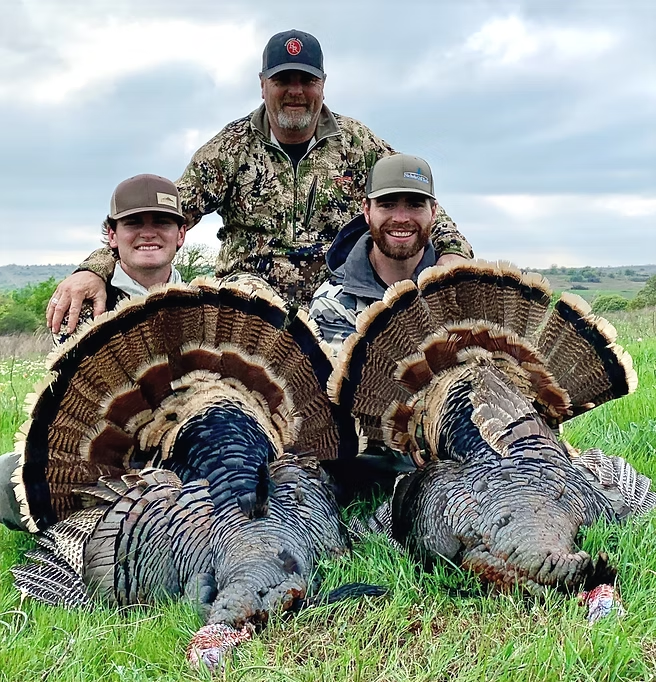
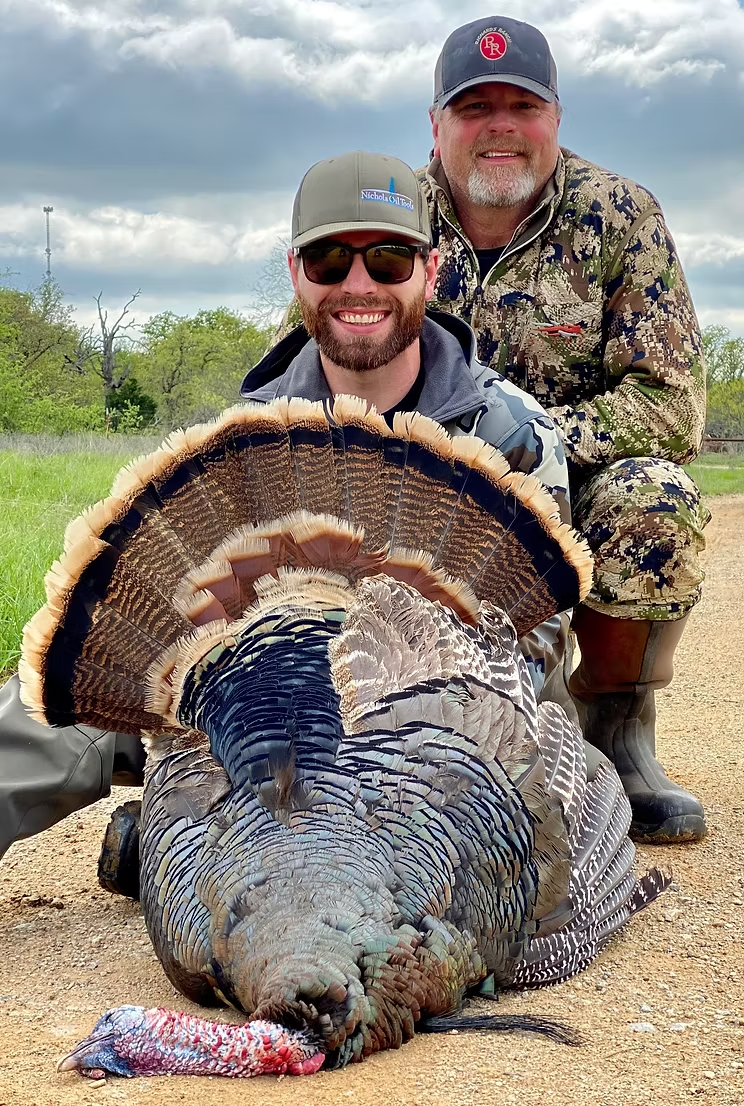
Even to the most seasoned hunter, there are few thrills in the field that can compare to bringing a big Texas longbeard to the call, and there’s no better place in the Dallas-Fort area to experience a fully-guided, truly world-class turkey hunt than right here at the Richards Ranch.Our 15,000-acre ranch is home to hundreds of large, mature Rio Grande gobblers, and because the hunting pressure on them is so light, you’re practically assured of the opportunity to take the turkey of a lifetime during your stay with us. Our toms have beards averaging in the 7-10 inch range, and a large number of breeding hens keep the population abundant, season after season. In fact, our guests’ success rate has exceeded 90%+!Whether you’re looking for a traditional shotgun hunt or challenging bow hunt, we invite you to contact us today to plan your spring turkey adventure. We’ll even add a wild hog hunt to your package at no additional charge!
THE HUNT OF A LIFETIME
Hog & Varmint Hunting
“… these brutes offer one of the most challenging and exciting hunts at the ranch…”
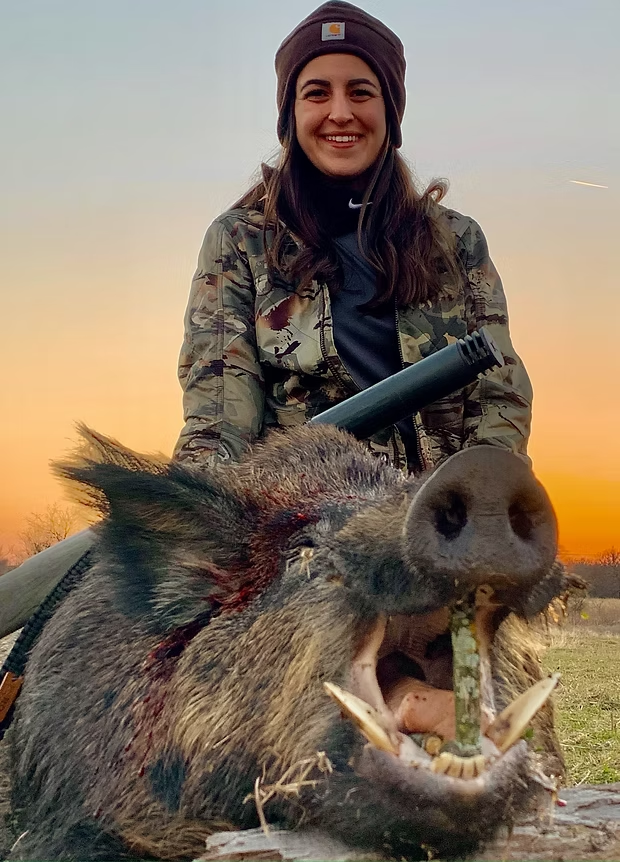
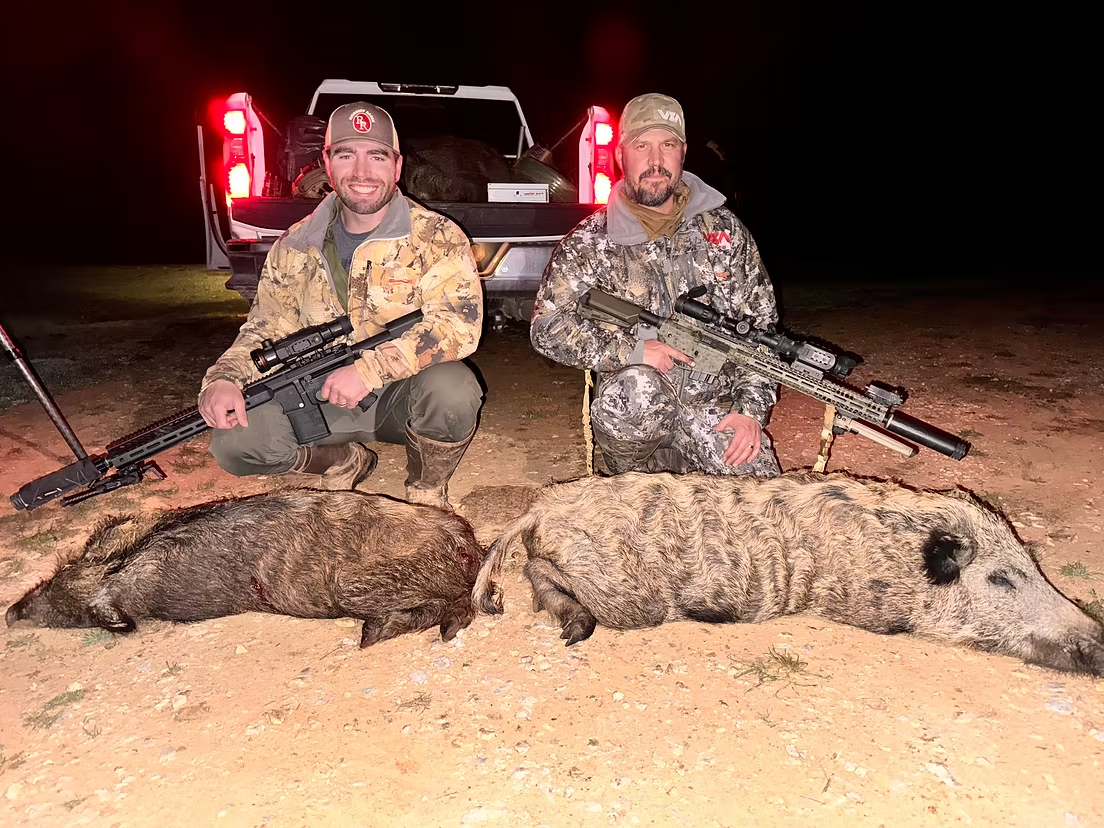
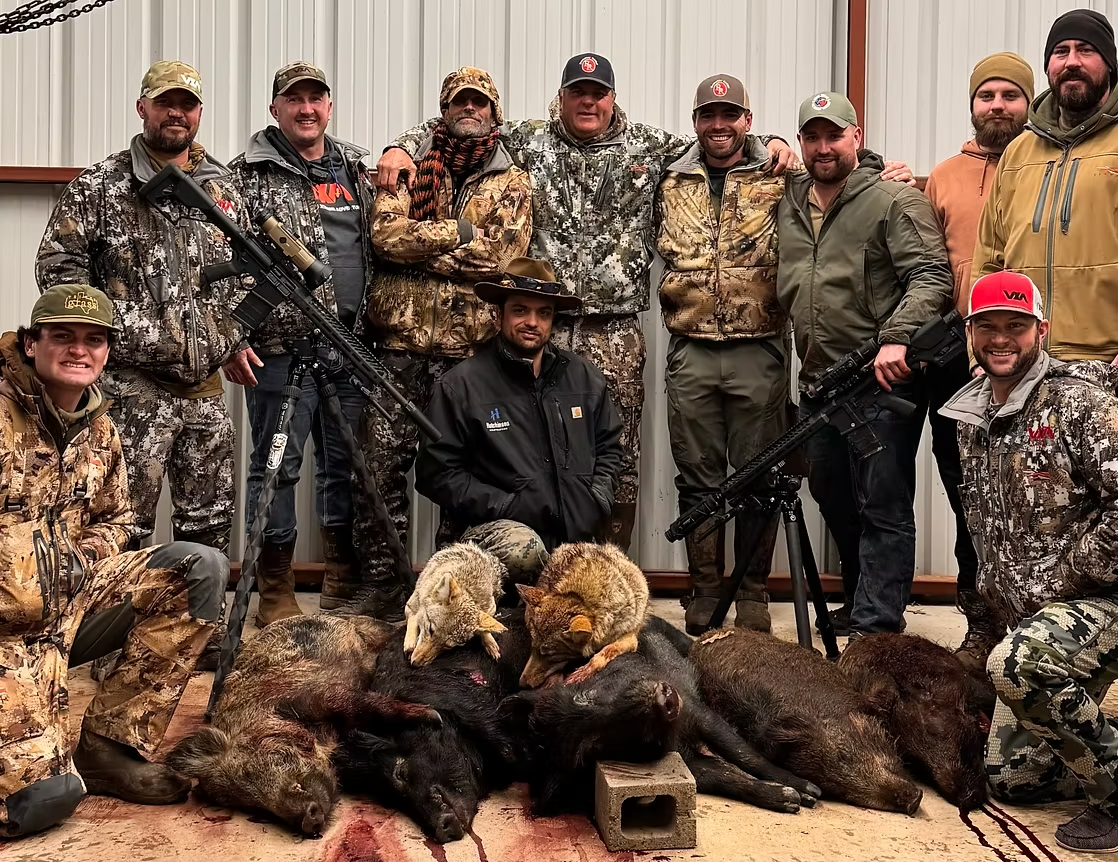
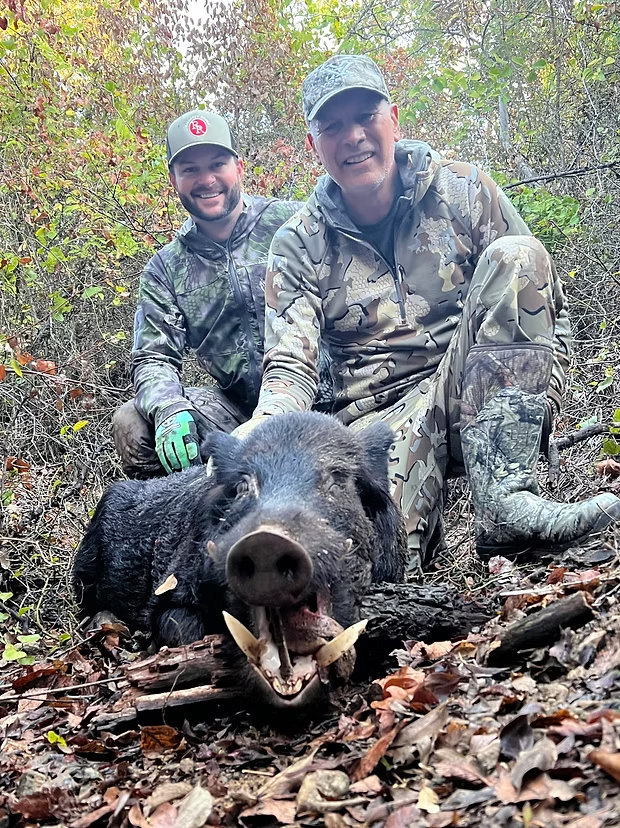
The Richards Ranch is not only home to a large population of trophy whitetails, but substantial numbers of massive Black Russian and feral hogs as well. Ranked among the smartest, toughest animals in North America, these brutes offer one of the most challenging and exciting hunts at the ranch – and one of the most affordable.
Our fully-guided hog hunts normally take place during the early morning and evening hours, when the animals are most active. Methods include using game calls, thermal/night-vision, helicopter, spot & stalk, and still-hunting over feeders and food plots. Trophy animals in excess of 300 pounds are not uncommon.
Whether you’re a rifle or bow hunter, we invite you to contact us today to plan a truly unforgettable Texas hog hunting adventure right here at the Richards Ranch.
HOG/VARMINT PACKAGES – STARTING AT $2,000
Includes 2 day/2 night accommodations, meals, guide, game care and ranch transportation.